


Solutions
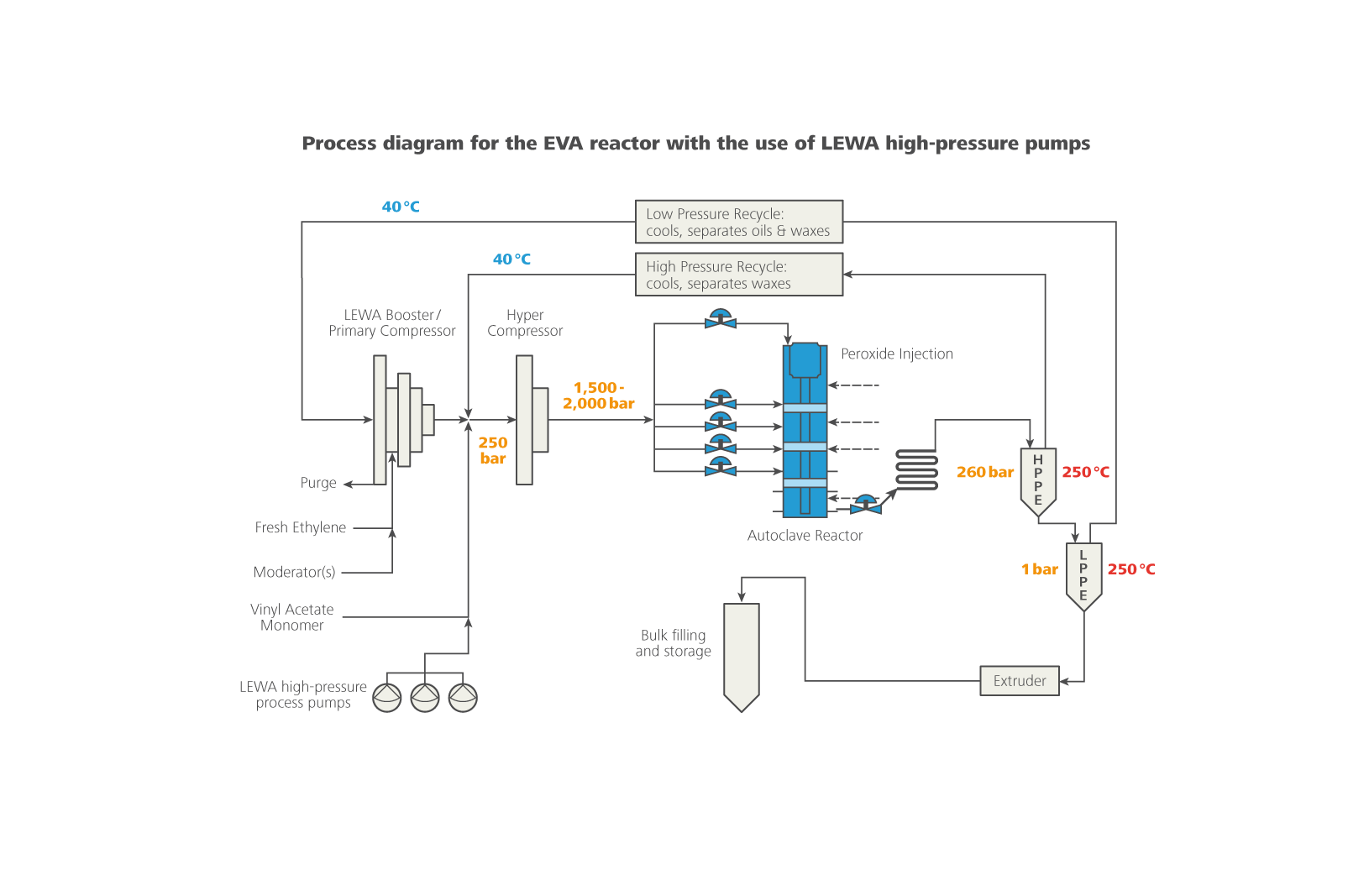
LEWA ecoflow and LEWA triplex process diaphragm pumps offer optimum properties for the polymerization process in EVA reactors:
- Hermetically tight: no contact with oxygen, no crystallization of the vinyl acetate copolymers
- Larger series of LEWA process pumps or LEWA pump skids are used for larger EVA reactors
- Highest system availability (> 97%) due to pump synchronization
- Large control ranges with high accuracy for setting the individual density of the EVAC
Areas of application
EVA is used in its pure form or with variable proportions of polyethylene and vinyl acetate in various areas, e.g:
- Films for industrial, agricultural or food applications
- Flexible hoses, pipes or cables
- Adhesives
- Coatings for solar cells
- Packaging
- Shoes
- Powder coatings, emulsion paints and polishes
Background
What is EVA?
EVA(C) is the abbreviation for "Ethylene Vinyl Acetate (Copolymer)". It is a plastic made from polyethylene and vinyl acetate copolymers or monomers. The polyethylene is obtained in so-called EVA reactors through the polymerization of ethylene gas.
Polyethylene is the most widely used plastic in the world. In most cases, petrochemical ethylene gas is used as the raw material. However, ethylene gas produced by dehydrating bioethanol can also be used.
Polyethylene is available in different densities. The density determines the properties, such as the weight or resistance of the material.
EVA is a plastic that is used to manufacture products that need to be soft and flexible. It is available as granules, aqueous dispersion, powder, but also as film material. The plastic has a high heat resistance and good ageing resistance.